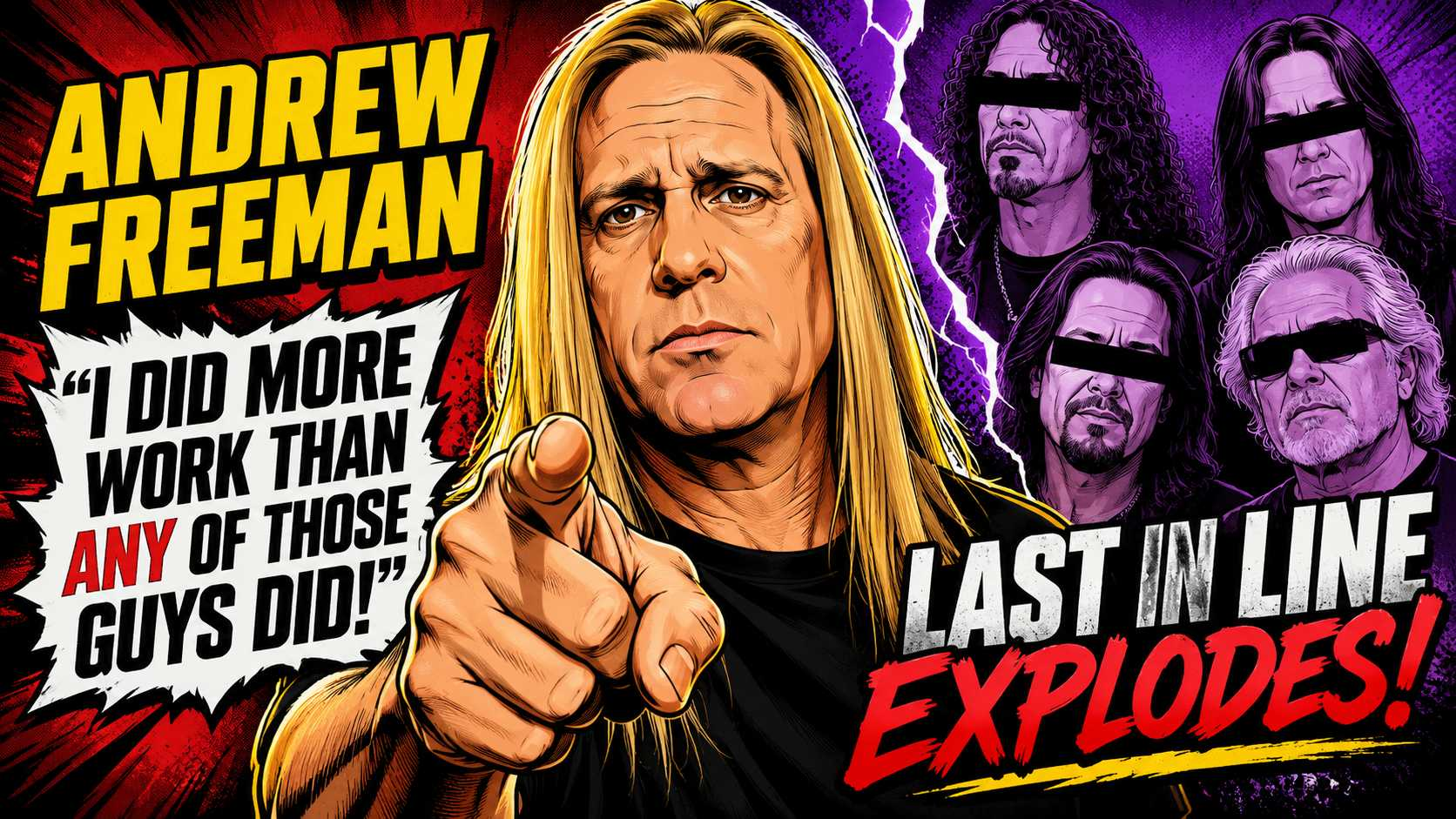

When former LAST IN LINE vocalist Andrew Freeman starts publicly talking about who really did the work behind the band's records, it's impossible not to pay attention. And based on his latest comments, this isn't just another musician moving on from a former gig. This feels like a score-settling moment.
Need something legendary spinning while this drama unfolds? Ozzy Osbourne - MEMOIRS OF A MADMAN - https://amzn.to/4lXWhAI
Freeman recently made it clear that he believes his contribution to LAST IN LINE went far beyond simply showing up and singing. According to Freeman, he handled much of the lyrical direction, vocal melodies, arrangements, and production-related work on the band's albums, going so far as to claim that he did more work on those records than any of his former bandmates.

That's the kind of statement that immediately divides a fanbase.
Here's the reality: rock and metal history is littered with stories of band members quietly carrying more of the creative load than fans realize. But most musicians are careful about how they discuss it publicly. Freeman didn't exactly choose the cautious route.
DON'T MISS THE FINAL LAST IN LINE RELEASE ON VINYL WITH ANDREW FREEMAN: https://amzn.to/4x5E6Ps
What makes this particularly interesting is that LAST IN LINE wasn't some brand-new startup band. It featured veteran musicians with deep resumes connected to the legacy of Ronnie James Dio and the classic DIO lineup.
That means Freeman's comments aren't just criticism. They're challenging long-standing perceptions about who was driving the creative process behind the band's modern-era releases.
And let's be honest: fans almost always assume the famous names are doing most of the heavy lifting.

Freeman is essentially arguing the opposite.
Why Fans Are Going To Fight About This
There are two camps forming immediately.
One side will argue that writing lyrics, crafting vocal melodies, shaping arrangements, and contributing to production are massive parts of the songwriting process. If Freeman truly handled most of those responsibilities, then he has every right to feel underappreciated.
The other side will point to the experience and legacy of the musicians around him and say there's no way the records become what they are without the instrumental foundation, musical direction, and decades of expertise those players brought to the table.
That's why this story is gaining traction.
It's not just about who left a band.
It's about ownership.
It's about credit.
And it's about a question every fan eventually asks:
Who really created the music we love?
One Thing Is Clear
Freeman isn't interested in giving generic "I wish everyone the best" exit interviews.
He's making sure fans know exactly how he views his contribution.
Whether you agree with him or not, that's going to keep this conversation alive for a while.
And if the remaining members of LAST IN LINE decide to respond publicly, this story could get even more interesting.
Before you go, drop your take in the comments:
Did Andrew Freeman deserve more credit for LAST IN LINE's success, or is he overstating his role?
POLL
Who do you believe is telling the real story about LAST IN LINE's creative process?
- Andrew Freeman carried the modern-era records
- The band was a true collaborative effort
- Freeman is dramatically overstating his importance