



Hollywood is about to get a new corporate name attached to two of its most recognizable entertainment brands.
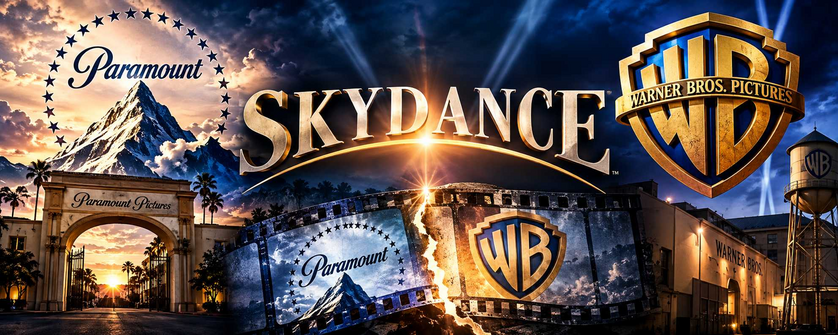
Paramount and Warner Bros. Discovery are moving toward completing their roughly $110 billion combination, and the resulting corporate entity will be called Skydance. Paramount Skydance CEO David Ellison announced the name Friday, October 2, just days before the companies are expected to officially close the transaction on October 6.
And yes — Skydance.
Not Paramount.
Not Warner Bros.
Not Paramount Warner Bros.
Skydance.
That decision says quite a bit about where the power is going in this new Hollywood.
Paramount And Warner Bros. Aren't Disappearing
The important distinction is that the famous studio names aren't being erased.
According to Ellison, Paramount and Warner Bros. will continue to operate as recognizable brands underneath the new corporate umbrella. The stated reasoning is that both studios have identities and histories that shouldn't be diluted by the corporate combination.
So audiences will still see:
- Paramount Pictures
- Warner Bros. Pictures
- HBO
- CNN
- CBS
- DC
- Nickelodeon
- MTV
- Comedy Central
- Paramount+
- HBO Max
- Discovery's extensive television portfolio
The corporate name sitting above all of that, however, will be Skydance Corporation.
The legal name change is scheduled for October 6, when Paramount Skydance's Class B shares are also expected to move from Nasdaq to the New York Stock Exchange under the ticker SKYD.
That's a remarkable transformation when you consider the history attached to the names being combined.
The Strange Part: Skydance Was The New Kid
There's an almost surreal element to this.
Paramount has been around since the dawn of Hollywood. Warner Bros. has been making movies for more than a century.
Skydance is comparatively young.
David Ellison founded Skydance Media in 2010, and the company became a major Hollywood production force through partnerships with Paramount on projects including Mission: Impossible, Top Gun: Maverick and other major franchises.
Then Skydance merged with Paramount Global in 2025.
Now Ellison's company name is about to sit over both Paramount and Warner Bros.
That's quite a corporate journey for a production company that didn't exist anywhere near the beginning of Hollywood's studio era.
This Isn't Just A Name Change
The bigger story is what the combined company represents.
The deal brings together enormous collections of film, television, streaming, sports and news assets.
Warner Bros. Discovery brings Warner Bros., HBO, HBO Max, CNN, DC, Discovery, TNT Sports, TBS, Cartoon Network, Adult Swim, Food Network and numerous other properties.
Paramount brings Paramount Pictures, CBS, CBS Sports, Nickelodeon, MTV, BET, Comedy Central, Showtime, Paramount+, Pluto TV and its other entertainment operations.
Put those libraries and businesses together and you're talking about one of the largest entertainment companies in the world.
And that is exactly why the transaction attracted so much scrutiny.
The Merger Had To Survive A Legal Fight
The deal didn't simply sail through.
The U.S. Justice Department concluded in June that its investigation did not find that the transaction was likely to harm competition in streaming, linear television or theatrical film development, production and distribution.
But a group of 12 states subsequently challenged the transaction.
That lawsuit was resolved through a settlement, and a federal judge approved the agreement on September 30, clearing the way for the companies to proceed toward closing.
The settlement includes commitments involving theatrical film production, worker support and editorial independence at CBS and CNN. Paramount also agreed to release at least 30 theatrical films annually during the first two years under the settlement terms.
The Writers Guild of America also settled its separate litigation related to the transaction.
So the road to Skydance has involved considerably more than simply signing paperwork.
And Then There's The $6 Billion Question
One of the biggest challenges facing Ellison and the new management team won't be coming up with a logo.
It will be figuring out what happens when you combine two enormous companies that already have overlapping operations.
Reuters reports that the combined company is targeting approximately $6 billion in cost savings while dealing with roughly $80 billion in combined debt.
That inevitably puts jobs, duplicated corporate functions and overlapping businesses under the microscope.
And that's where this gets particularly interesting for Hollywood.
The new company isn't simply inheriting two giant entertainment libraries.
It's inheriting two giant entertainment infrastructures.
Studios.
Streaming services.
Television networks.
Sports operations.
News organizations.
Technology.
Advertising.
Corporate staffs.
International operations.
There will be enormous pressure to determine what stays, what gets combined and what gets cut.
David Ellison Is Putting His Name — And His Company — On It
There's also a very obvious symbolism to the decision.
The combined corporation could have been called Paramount Warner Bros. Entertainment, Warner Paramount, or something entirely new.
Instead, Ellison chose the name of the company he founded.
Some analysts have interpreted that as a demonstration of Ellison's control over the newly created entertainment empire.
But Ellison's stated explanation is different: he says the Skydance name provides a corporate identity while allowing Paramount and Warner Bros. to retain their individual identities.
Either way, the symbolism is hard to miss.
Paramount and Warner Bros. are the brands people know. Skydance is the company now sitting above them.
Hollywood's Old Guard Just Got Reorganized
There's something almost fitting about this happening in 2026.
For decades, Hollywood was dominated by a relatively small collection of legendary studios. Paramount, Warner Bros., MGM, Universal, Columbia and Disney became household names.
But the modern entertainment business has changed dramatically.
Streaming shattered the old distribution model.
Cable television has been under enormous pressure.
Movie theaters have become more dependent on major franchise releases.
Technology companies have entered entertainment at enormous scale.
And traditional media companies have been forced to rethink what their businesses actually are.
The Paramount-Warner transaction is another enormous step in that transformation.
And now, when the deal closes, two of Hollywood's oldest and most recognizable studios will effectively operate under the corporate umbrella of a company created only in the 21st century.
Skydance.
The name may be new at the top.
But underneath it sits more than a century of Hollywood history.
And what happens next could determine what that history looks like for the next generation.